top of page
home
podcast
articles
commentary
speeches
contact
More
Use tab to navigate through the menu items.
Commentary
Play Video
Play Video
07:48
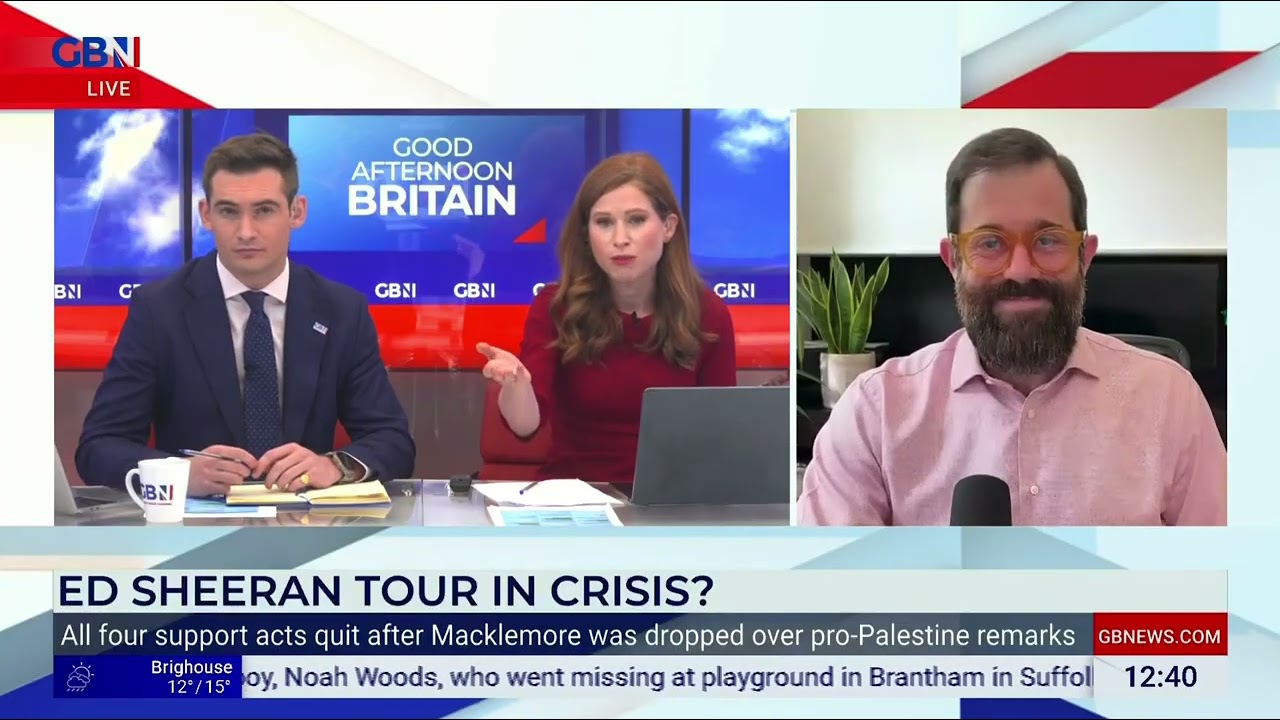
All support acts on Ed Sheeran's US tour quit after Macklemore dropped for 'free Palestine' speeches
Macklemore kicked off a massive controversy during his opening sets on Ed Sheeran's "Loop" tour at MetLife Stadium when he used his stage time to deliver intense pro-Palestinian speeches and display graphic wartime visuals from Gaza on the stadium screens. While Macklemore framed his message as a call for peace, the high-profile performance triggered an immediate backlash from prominent figures, Jewish advocacy groups, and stadium owners like Robert Kraft. The fallout was swift: Macklemore was officially dropped from the tour, sparking a domino effect as multiple other opening acts withdrew in solidarity. In this exclusive interview, we break down exactly what went down on stage, the industry-wide reactions, and what this explosive fallout means for the future of political expression in music.
Play Video
Play Video
03:10
After racist comments about Andi Peters, Miriam Margolyes moves on to 'fat people' and 'cripples'
Miriam Margolyes enjoys offending people. After a career spent taking pride in provocation, she can hardly expect the benefit of the doubt now, despite her old age and the possibility her mental faculties might be deteriorating. Her patronising remarks about Andi Peters and general attempts to perpetuate her fame through offensiveness keep being rewarded with attention. She chases attention through controversy and the desperate desire to be noticed. Rather than supplying the outrage such performances depend on, perhaps the answer is simpler: roll our eyes, stop paying attention and stop giving her the audience she so wants.
Play Video
Play Video
04:00
UK Foreign Secretary releases anti-Israel video as Labour government poised to sanction Israel
UK Prime Minister Andrew Burnham is set to announce fast-tracked sanctions against Israel according to reports. The British Government will move against Israeli settlements in Judea and Samaria, despite criticism of the plans from the White House and some Labour MPs. The announcement comes one day after ministers set the schedule for a by-election in Sir Keir Starmer’s former seat of Holborn and St Pancras, where Labour is under threat from the Green Party.
Play Video
Play Video
05:25
BBC accused me on air of 'rage baiting' for writing about multi-faith prayer rooms and Islam
The BBC invited me on their Sunday programme to discuss my recent article and podcast interview with Dr Andrew Crompton on Multi-faith prayer rooms, and then read out a pre-prepared thing saying I was “rage-baiting”. The original long form discussion with Dr Crompton is here: https://youtu.be/74g7mFzbIW0 You can support me by donating here: https://jonathansacerdoti.com/support
Play Video
Play Video
03:50
US ambassador Huckabee accuses UK govt of ‘Jew hate’ over claim Israel blocks medicine from Gaza
As British Jews mark the anniversary of the Yom Kippur terrorist attack that killed two worshippers at a Manchester synagogue, UK Foreign Secretary Edward Miliband has increased tension and danger for Jews by releasing a video recounting “stories” he says he heard of Israel blocking medicine from entering Gaza. Israeli Foreign Minister Gidon Saar warned of punitive action if Britain moves against Israel. US ambassador to Israel Gov Mike Huckabee has accused the British government of “Jew hate” over Miliband’s claims.
Play Video
Play Video
11:08
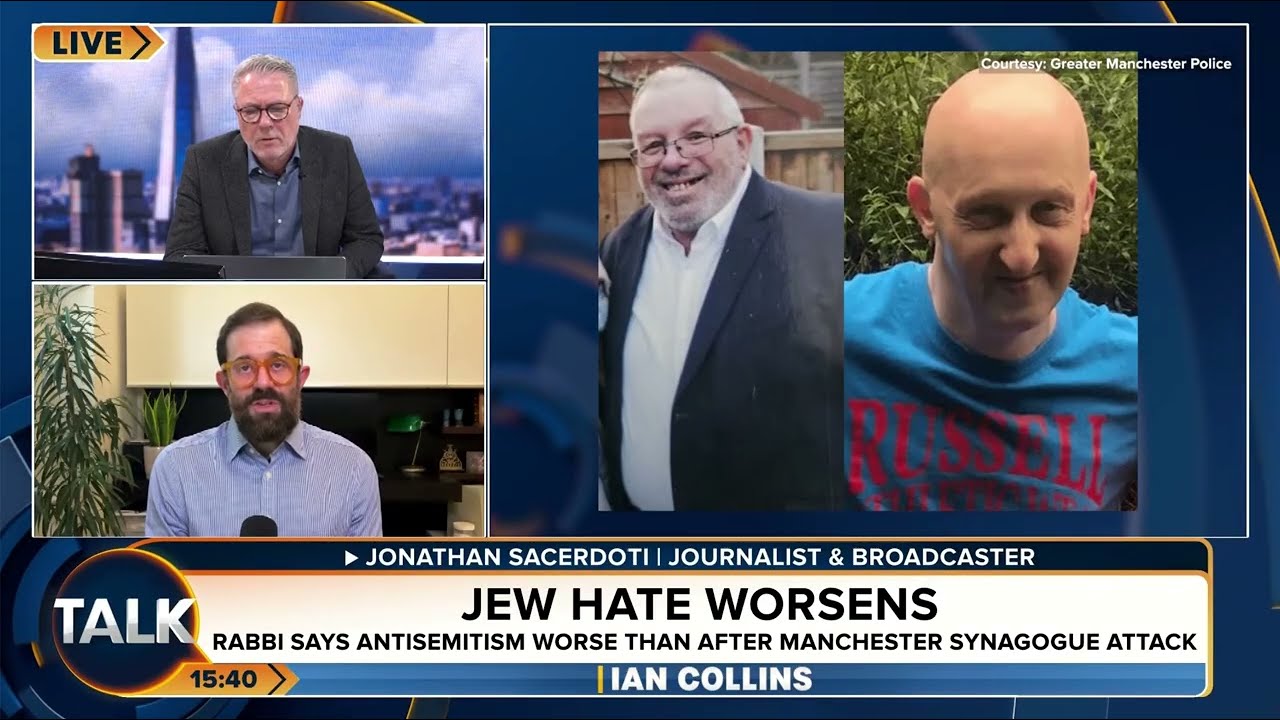
One year on from synagogue killings in Manchester, Rabbi says things have got worse, not better
Adrian Daulby ז״ל and Melvin Cravitz ז״ל were killed in a terrorist attack on Heaton Park synagogue in Manchester, just under one year ago. May their memory be for a blessing. Today, their Rabbi says things have got worse not better.
Play Video
Play Video
09:40
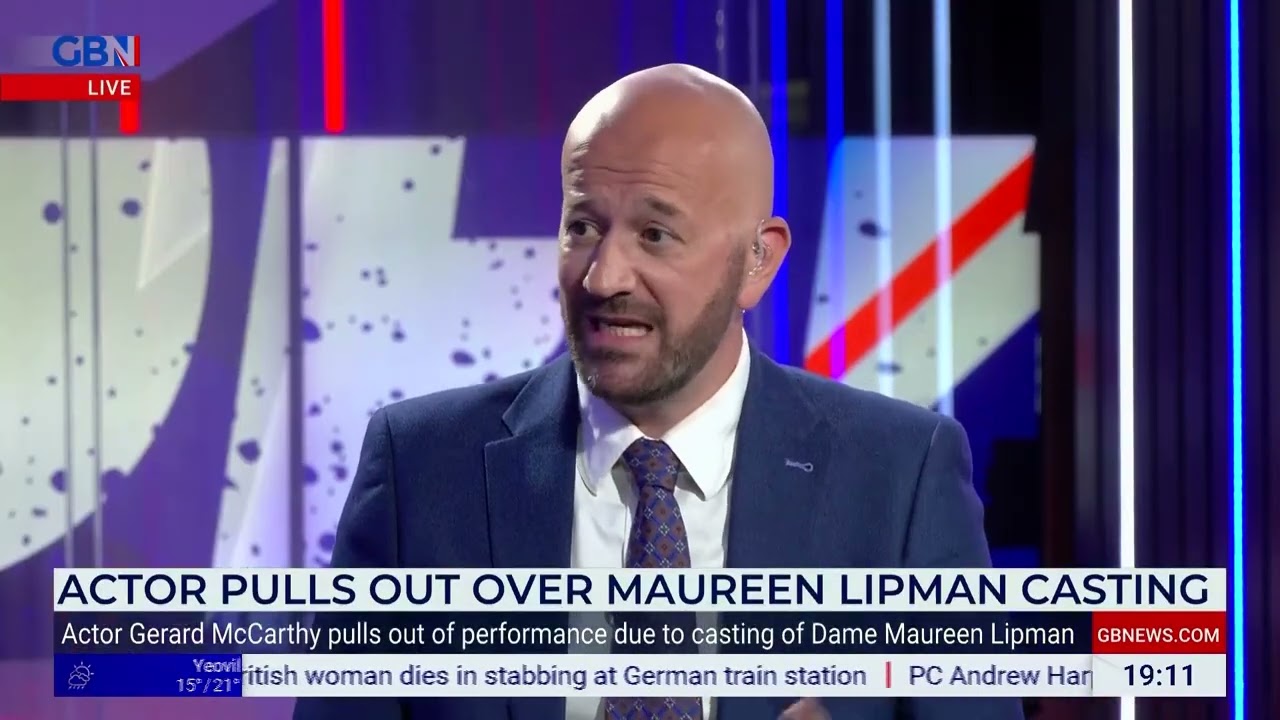
Jewish actors Sacha Baron Cohen and Dame Maureen Lipman targeted for boycott or cancellation
Jonathan Sacerdoti discusses the controversy over Sacha Baron Cohen's revival of his Ali G character, and one actor's decision to pull out of a play in which he was due to appear alongside Dame Maureen Lipman. Are actors being targeted because they are Jewish?
Play Video
Play Video
09:49
Jonathan Sacerdoti Real America with Dan Ball
After the Oxford Union Islam debate, Jonathan Sacerdoti discusses with Dan Ball on One America News how the reaction around the world has started an important discussion about Islam, the far left, security and safety, and how Islamism has entered Western political systems.
Play Video
Play Video
24:19
The Oxford Union Debate That Broke the Internet — Jonathan Sacerdoti Tells All | The Brief | PragerU
The Oxford Union debate clip that broke the internet — and what happened behind the scenes. In this episode of The Brief, host Shabbos Kestenbaum sits down with Jonathan Sacerdoti — British broadcaster, journalist, and public intellectual — for a conversation about the Oxford Union debate that went viral around the world, the BBC's Gaza documentary scandal, and what the UK's two-tier approach to law and media actually looks like from the inside. The debate — on the motion, "The West Should Be Suspicious of Islam" — took place in June but was held back by the Oxford Union for weeks. When selective clips started leaking to Middle East Eye, Jonathan and his team released their own footage. Within hours, the Oxford Union found the upload button. The result: millions of views and a global conversation. You can watch Jonathan's speech in full here: https://youtu.be/Sz6xwRL12hk
Play Video
Play Video
14:33
UN data reveals: NO FAMINE in Gaza Strip. Barely any reporting in mainstream news publications
The UN’s own latest Gaza nutrition survey blows apart the famine narrative: acute malnutrition among under-fives was just 0.2–0.8%. • The UN report’s own conclusion: there is “no widespread acute malnutrition at population level”. • Gaza’s pre-war acute-malnutrition rate was around 0.8%. The new measurements are therefore at or below the pre-war level. • Gaza’s figures are lower than neighbouring countries: Egypt 2.9%, Jordan 2.0%, Syria over 12%. Even Bulgaria is 4%. • The famine threshold is 30% acute malnutrition by WHZ. The new Gaza measurements are 0.2–0.8% — a tiny fraction of that threshold. • Meanwhile, on 30 June @YvetteCooperMP described Gaza's situation as “desperate” and announced another £23 million of British taxpayers' money for UNRWA. • Politicians and campaigners were talking about ‘starvation’ while the UN nutrition system was producing physical measurements showing extremely low acute malnutrition.
Play Video
Play Video
05:59
Ireland’s €53m government jet ‘can’t land in fog’ after Israeli tech boycott
Ireland’s new €53 million government jet was reportedly ordered without an Israeli-made enhanced vision system because purchasing it would have required a direct agreement with defence company Elbit Systems. The FalconEye system helps pilots operate and land in fog and extremely poor visibility. Ireland insists the aircraft remains fully operational, but the controversy has highlighted a wider contradiction: Israeli technology is already embedded in other Irish military aircraft. The story raises a bigger question about wider attempts to boycott Israeli technology while many European countries continue to rely on Israeli innovation across defence, aviation and healthcare.
Play Video
Play Video
17:15
Millions are watching this Islam debate: Jonathan Sacerdoti on what really happened at Oxford
A controversial Oxford Union debate asking whether the West is right to be suspicious of Islam has attracted huge attention online. Journalist and broadcaster Jonathan Sacerdoti spoke in favour of the motion, arguing that difficult questions about Islam, extremism and its relationship with Western society should be discussed openly rather than avoided. Videos from the debate are now reaching millions of people in just the first few days online, igniting an international conversation about Islam, extremism, free speech and the willingness of Western societies to confront difficult and controversial questions. In this interview, Jonathan Sacerdoti discusses what happened inside the Oxford Union, the arguments made during the debate, the extraordinary reaction to his speech and why he believes these subjects need to be discussed openly, frankly and responsibly.
Play Video
Play Video
08:44
Boy George quits West End show after releasing pro-Jewish song and Diane Abbott readmitted to Labour
Boy George has pulled out of Andrew Lloyd Webber’s Jesus Christ Superstar at the London Palladium, just days before he was due to appear as King Herod. The decision follows a fierce backlash over a new song released by the singer defending Israel’s military actions and rejecting accusations that Israel is committing genocide in Gaza. Boy George had been due to take on the cameo role of King Herod from 3–15 August. His manager, Paul Kemsley, said the decision to withdraw was made to prevent the controversy from distracting from the West End production. Meanwhile, Diane Abbott has been readmitted to the Labour Party after having the whip withdrawn and sitting as an independent MP. The veteran MP and former shadow home secretary had been suspended from the parliamentary Labour Party following a series of controversies, most recently over comments about racism and prejudice. Her readmission brings Abbott, one of Labour’s longest-serving and most prominent MPs, back into the parliamentary party after a prolonged and highly public dispute with the Labour leadership.
Play Video
Play Video
03:45
Should there be a Burqa ban? Jonathan Sacerdoti on why face coverings in public are anti-social
Jonathan Sacerdoti joins Matt Goodwin to discuss whether full-face coverings have any place in a modern Western society. He argues that the issue is not simply religious dress, but the deliberate removal of the face from ordinary human interaction. Sacerdoti says faces are fundamental to communication, trust and participation in public life, whether people are speaking in person, on television or through video calls. Covering the face, he argues, creates separation between the wearer and wider society and risks encouraging parallel communities rather than integration.
Play Video
Play Video
09:10
Gary Lineker helps Andy Burnham sell a one-sided anti-Israel narrative
Andy Burnham’s decision to discuss Gaza with Gary Lineker raises a revealing question: was this a serious attempt to address one of the world’s most complex conflicts, or a carefully chosen platform designed to avoid difficult scrutiny? Burnham presented a familiar indictment of Israel, accusing its government of violating the ceasefire and worsening the humanitarian crisis in Gaza. He also suggested that war crimes may have been committed and argued that Benjamin Netanyahu’s government is making a two-state solution impossible. What was largely absent was any comparable examination of Hamas. There was no serious discussion of its failure to disarm, its violations of ceasefire terms, its obstruction of aid or the continuing consequences of the 7 October attacks. Nor was there recognition that Hamas’s massacre, kidnappings and continued military control of Gaza have themselves made any credible peace process vastly more difficult. Lineker left the BBC after controversy over sharing a social-media post about Zionism that included an image of a rat. He apologised, but Jewish communal organisations described the apology as inadequate. Against that background, Burnham’s decision to use Lineker as a vehicle for another intervention on Gaza appeared to speak to a sympathetic audience without facing informed challenge. The episode also exposes a broader uncertainty about Burnham himself. He once spoke of making Israel his first foreign visit as Labour leader, in solidarity with Israel and British Jews. His current rhetoric is markedly different. That shift will strengthen the suspicion that his position is being shaped less by principle than by the electoral coalition he hopes to assemble. For British Jews, the concern is not simply that another politician has criticised Israel. It is that Israel is being singled out, Hamas is being minimised, and Jewish anxieties are being treated as politically expendable. Burnham may believe this strategy helps his route to Downing Street. It may instead leave voters asking the most basic question of all: what does he actually believe, and does it even matter?
Play Video
Play Video
14:12
Middle East panel: Jonathan Sacerdoti speaks at the ARC conference, 2026
Jonathan Sacerdoti speaks at ARC 2026’s dinner event, The Future of the Middle East: Pathways to Peace and Stability, held at the Royal Horseguards Hotel in London. In these selected sections, Jonathan draws on his experience as a journalist reporting extensively from the Middle East, including from inside Gaza since October 7th. He reflects on what this pivotal moment reveals about the prospects for peace and stability across the region, the West’s response to the conflict, the defence of shared values, and the sources of hope he sees in Israel’s resilience, the Abraham Accords, and the ability of free societies to stand together. The evening brought together leading voices on the Middle East to explore what pathways to peace, stability and shared prosperity might look like, and how the momentum created by the Abraham Accords can be built upon in the years ahead. About the panel: John Anderson The Hon. John Anderson AC FTSE served as Deputy Prime Minister of Australia for six years between 1999 and 2005 alongside The Hon. John Howard OM AC SSI. He now serves in a wide range of civic and community roles and hosts one of Australia’s leading politico-cultural video podcasts. Amjad Taha Amjad Taha is a political strategist, author and analyst from the UAE. His work in Western and Arab media offers perspectives on regional dynamics, and he is known for advocating peace, normalisation and dialogue between cultures. Bishop Robert Stearns Bishop Robert Stearns is a global influencer, thought leader, mobiliser and commentator on the Middle East. He has led the international Day of Prayer for the Peace of Jerusalem for more than twenty years and has worked with leaders in religion, government and public life around the world. Jonathan Sacerdoti Jonathan Sacerdoti is a journalist, commentator and analyst specialising in the Middle East, free speech, Jewish communities and Western values. As UK and Europe Correspondent for i24News for over a decade, he has reported from terror attacks across Europe and from inside Gaza since October 7th. He is a columnist for The Spectator, The Jewish Chronicle and The Algemeiner, and regularly contributes to Fox News, Sky News and the BBC.
Play Video
Play Video
04:19
Israeli TV reports on the UK's fights over the England and British flags being flown in the streets
Play Video
Play Video
08:07
Students and guests at the Oxford Union were afraid to be confronted by a cartoon of Mohammed
Play Video
Play Video
02:15
UK Jury finds no problem with death chant aimed at Jews
The chant “Khaybar, Khaybar, O Jews, the army of Muhammad will return” invokes the 628 CE Muslim victory over the Jewish community of Khaybar as a threat against Jews today. It is widely regarded as antisemitic because it explicitly addresses “Jews” (ya Yahud) rather than ‘Israelis’ or ‘Zionists’, framing them as the target of renewed violence or subjugation by Islam. It is hard to think of a situation where this historical reference would be chosen without for chanting in public today except as an intimidation slogan, implying that the fate of Khaybar should be repeated against Jews in the present. It is therefore baffling how two women filmed chanting the slogan were unanimously cleared by a jury of using threatening, abusive, or insulting words or behaviour intending to stir up racial hatred, at Southwark Crown Court. According to Court News UK: “A mother and daughter accused of making threats against Jewish people at a march organised by the Palestinian Solidarity Campaign have been were cleared by a jury. Fatiah Boumazouna, 55, and Hadjer Boumazouna, 28, were arrested the day after the demo near Trafalgar Square on 28 October 2023 — three weeks after Hamas attacked Israel. They both released a statement following their rest apologising for any offence caused but insisted they had ‘no intention to recite racial or religious hatred’” The jury is reported to have taken just 28 minutes before reaching their decision to acquit the two women.
Play Video
Play Video
07:36
What has happened to Donald Trump?
Has Trump capitulated? What's really going on? So many are disappointed with his course of action, but there's also so little that is truly clear about the situation.
Play Video
Play Video
04:15
Police clashed with protestors trying to shut down debate on Islam at Oxford Union
My debate last night at the Oxford Union went ahead despite shabby policing and scummy protestors trying to shut it down. We debated whether or not the West should be suspicious of Islam. I am a great believer in the power of debate and discussion, especially on important topics like this one. I am against violent mobs trying to shut down debate and stop other people from speaking at or attending debates to hear varied opinions and views. This should be a default position for free Westerners.
Play Video
Play Video
04:22
Will today’s Mandelson files finally destroy Keir Starmer? And who else could they damage?
The UK government is today releasing the second tranche of the so-called “Mandelson Files” — thousands of pages of private emails, WhatsApp exchanges, and documents that were never meant for public view. The papers, forced into the open by a Conservative-backed Humble Address in Parliament, cover the controversial appointment and swift downfall of Peter Mandelson as UK Ambassador to the United States. So far we know Starmer ignored warnings from his own national security adviser and pushed through Mandelson’s appointment despite his failed security vetting and his links to Jeffrey Epstein. Mandelson has admitted his friendship with Epstein was a “terrible mistake,” maintaining contact even after the financier’s 2008 conviction. The US Epstein files even included a photo of Mandelson, former-Prince Andrew, and Epstein together in bathrobes on Martha’s Vineyard around 2000. The release is also expected to shine fresh light on private conversations with other Labour figures, including Wes Streeting, a would-be usurper of Starmer, who pre-emptively published his messages with his mentor Mandelson some months ago. Among those was a blunt July 2025 exchange in which Streeting accused Israel of “war crimes,” “ethnic cleansing,” and “rogue state behaviour.”
Play Video
Play Video
03:43
Jewish man 'kicked like animal' in Golders Green attack
A violent attack on a Jewish man in Golders Green, London, after he spoke Hebrew on a phone call, has once again called into question the safety of Jews in the UK.
Play Video
Play Video
02:24
Piers Morgan clashes with Jonathan Sacerdoti over claims of being 'partisan'
Play Video
Play Video
07:46
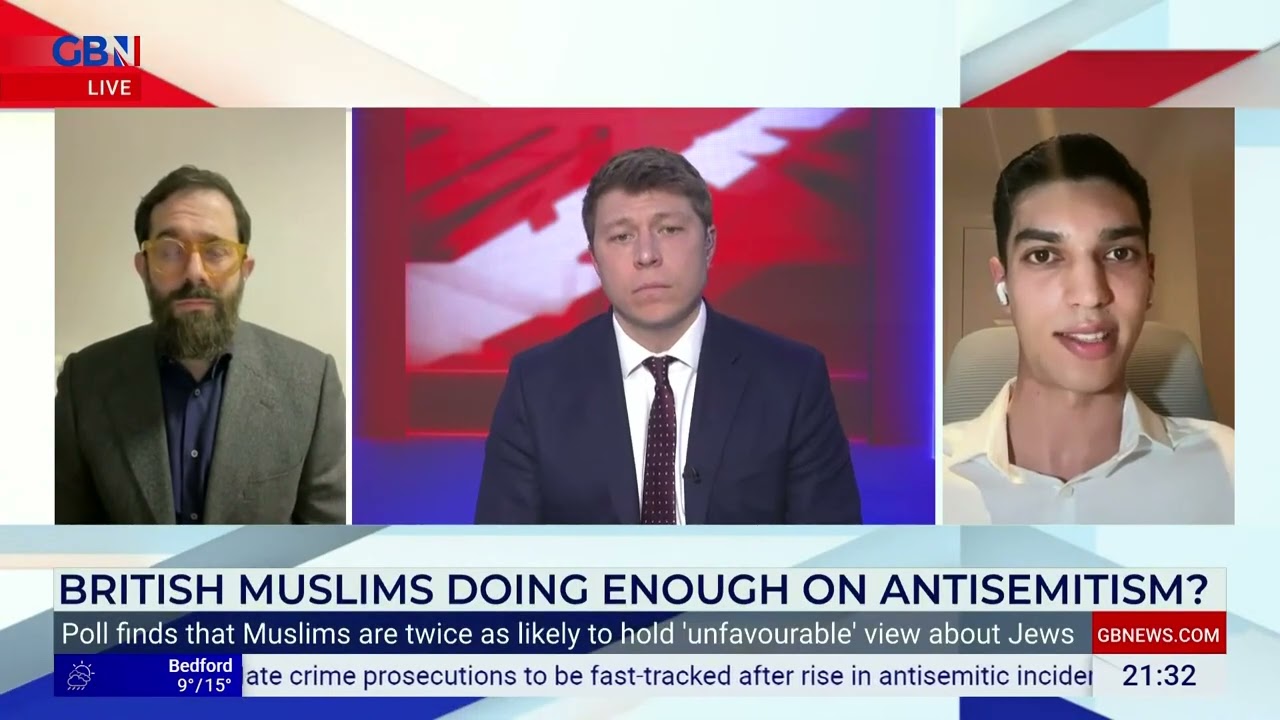
Polling shows worrying levels of anti-Jewish opinion among some Muslims
This was certainly a weird one. I was asked to discuss Policy Exchange’s polling which claimed that “among the British Muslims living in the polled areas, there are worrying levels of anti-Semitic conspiratorial beliefs and support for the criminalisation of blasphemy. The findings show that the UK is far from being a stable multi-faith democracy.” But the other chap kept going on about “far right grooming gangs”. After his initial answer, which sounded a bit Chat GPT, he seemed to lose the ability to form full sentences. When I asked about the gangs, he said he didn’t mean what he’d said.
Play Video
Play Video
08:14
Zack Polanski, anti-Israel marches, and the extremism Britain refuses to face
Jonathan Sacerdoti argues that the debate over banning marches and inflammatory slogans is not simply a free speech issue, but a question of intimidation, coercion and public safety. He says the so called pro-Palestine movement in Britain has too often become anti Israel, hostile to Jews and disruptive to ordinary life, with chants such as calls for intifada carrying direct historical associations with terrorism and violence. He also examines the role of Iran, Hamas and Islamist influence in shaping parts of the protest movement, including events such as Al Quds Day. He challenges the fashionable framing of Palestinian activism as a simple liberation cause, discusses the legacy of the PLO and Yasser Arafat, and discusses Zack Polanski, the Greens and the growing alliance between far left politics, Islamist extremism and anti Jewish hostility in Britain.
Play Video
Play Video
16:11
Anti Jewish violence in the UK has risen, and the government has increased the terror threat level
Jonathan Sacerdoti discusses the latest news regarding antisemitism in the UK, and recent terrorist attacks.
Play Video
Play Video
05:24
Starmer dodges angry crowds in Golders Green: Jonathan Sacerdoti says government not doing enough
As Keir Starmer visits Golders Green in London, where two Jewish men were stabbed, Jonathan Sacerdoti says the government is not doing enough to protect Jewish people or to root out the causes of Jew hatred in the UK.
Play Video
Play Video
07:02
After Golders Green Jew stabbing, BBC muted the mic: here's what they tried to silence about Greens
Jonathan Sacerdoti interviewed on BBC Radio Berkshire, following the stabbing of two Jewish men in Golders Green, London,
Play Video
Play Video
06:03
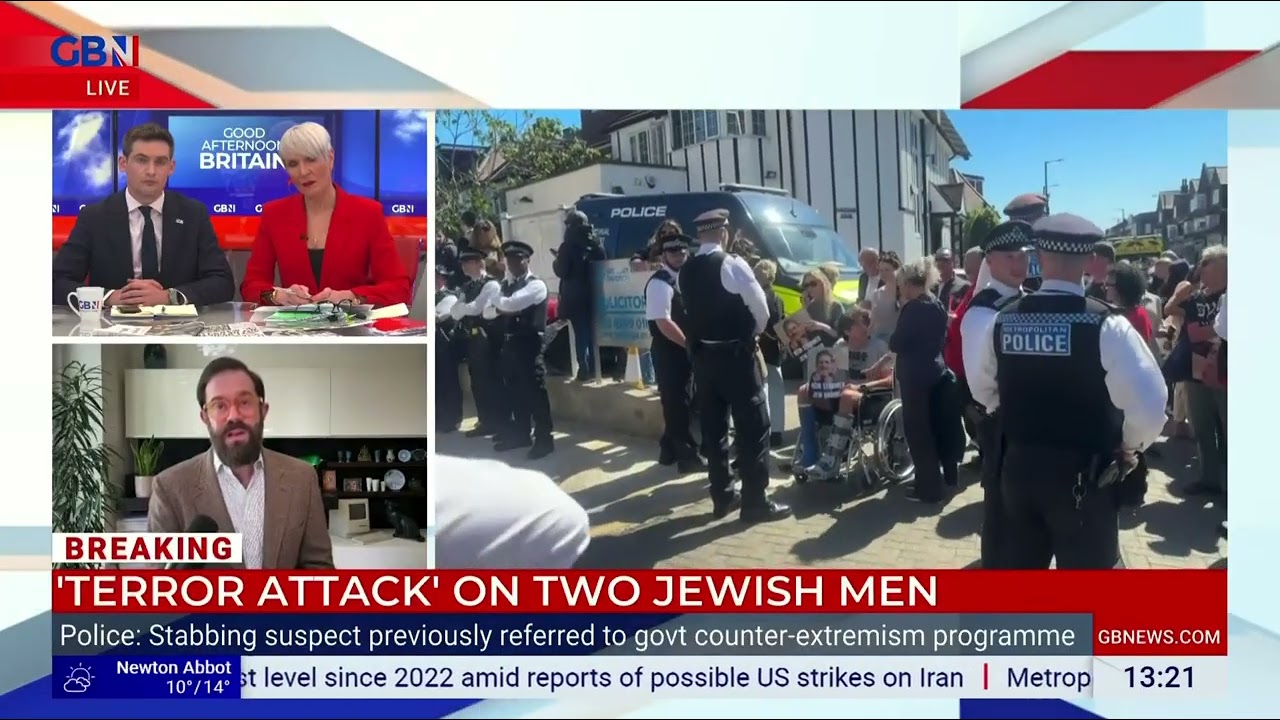
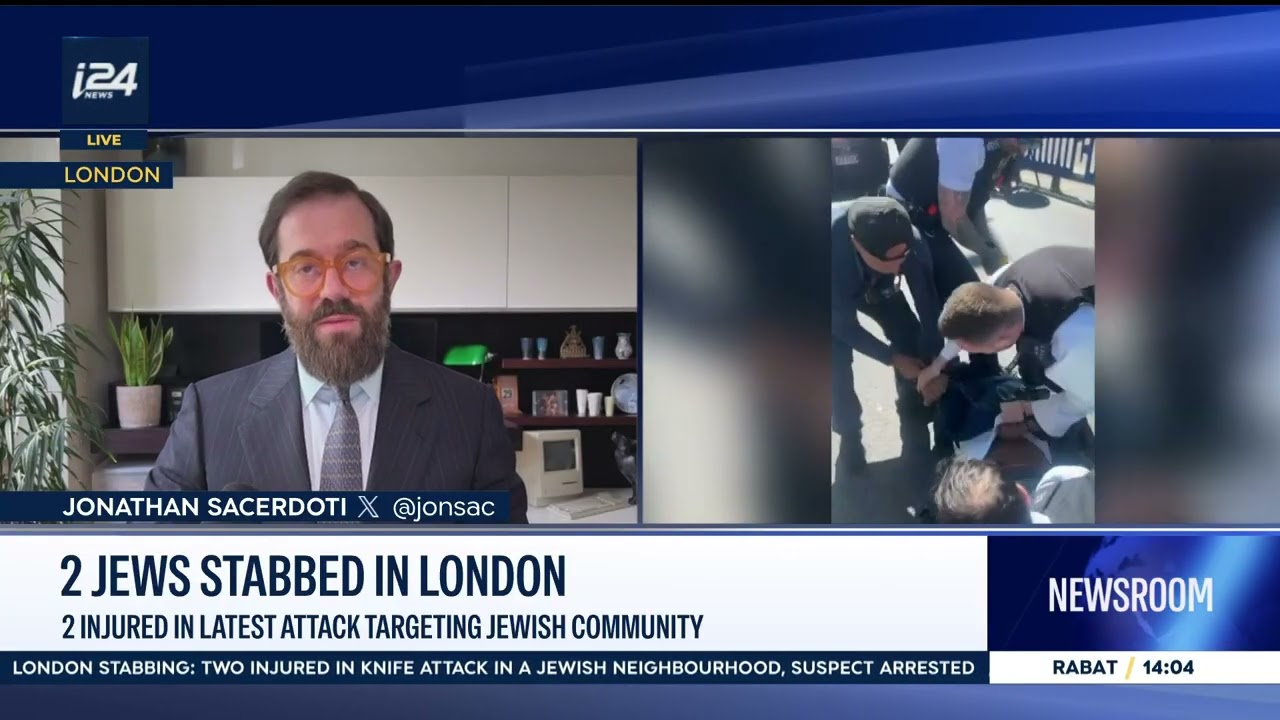
Two Jewish men stabbed in London as wave of anti-Jewish violence continues unabated
Play Video
Play Video
07:28
Debate: can driverless cars replace London cabs? Black taxi driver Tom Scullion & Jonathan Sacerdoti
As Waymo tests its driverless cars in London, many are asking whether they will be able to cope with London's unique city layout and historic roads. Black taxis are famous round the world as London's gold standard, but now technology has arrived which might challenge their dominance.
Play Video
Play Video
04:29
Iran-Linked Group Claims String of Attacks on Jewish Sites in London
A shadowy Islamist group has claimed responsibility for a series of arson attacks targeting Jewish sites across London. Recent incidents involving Jewish targets include an attempted firebombing at Kenton United Synagogue, attacks on synagogues in Finchley, and the burning of Hatzola ambulances used by a volunteer Jewish emergency service. The group has released videos after some incidents claiming involvement, but its structure, credibility, and direct responsibility remain unclear, with police and counterterrorism officers continuing to investigate. The attacks form part of a broader and increasingly visible pattern, raising concern within the Jewish community and beyond. While officials repeat that there is no place for antisemitism in Britain, questions persist over the urgency and consistency of the response, particularly when compared with other cases where arrests have been made swiftly. Limited media coverage and a wider rise in attacks on religious sites across Europe have intensified fears that the scale of the threat is not being fully acknowledged.
Play Video
Play Video
11:09
Attack on London synagogue follows 20 synagogue attacks worldwide and 94 church arsons across Europe
A man and a woman have been arrested on suspicion of arson endangering life after a synagogue in north London had two bottles thought to contain petrol thrown at it. The attack on the Finchley Reform Synagogue is being treated as an antisemitic hate crime, according to police who arrested the 47-year-old woman and 46-year-old man in the Watford area.
Play Video
Play Video
14:12
Is trump ideological, pragmatic, or chaotic? Jonathan Sacerdoti explains the US president's actions
What is really driving the current Middle East crisis? In this conversation, journalist and broadcaster Jonathan Sacerdoti explains the growing tensions around Iran, the strategic pressure in the Strait of Hormuz, and the wider power struggle involving the United States and Israel. The discussion explores how Donald Trump is approaching the situation, combining ideology, unpredictability, and economic pressure to push Iran towards negotiations. It also examines whether this is a calculated strategy or a high-risk gamble, and why Iran remains such a difficult negotiating partner. Beyond geopolitics, the conversation highlights the real-world impact on energy prices, inflation, and the UK economy, showing why this conflict matters far beyond the region. With negotiations largely happening behind closed doors, the outcome remains uncertain, but the stakes could not be higher.
Play Video
Play Video
03:29
Dr Gad Saad on his latest book, 'Suicidal Empathy: dying to be kind', out on May 12th
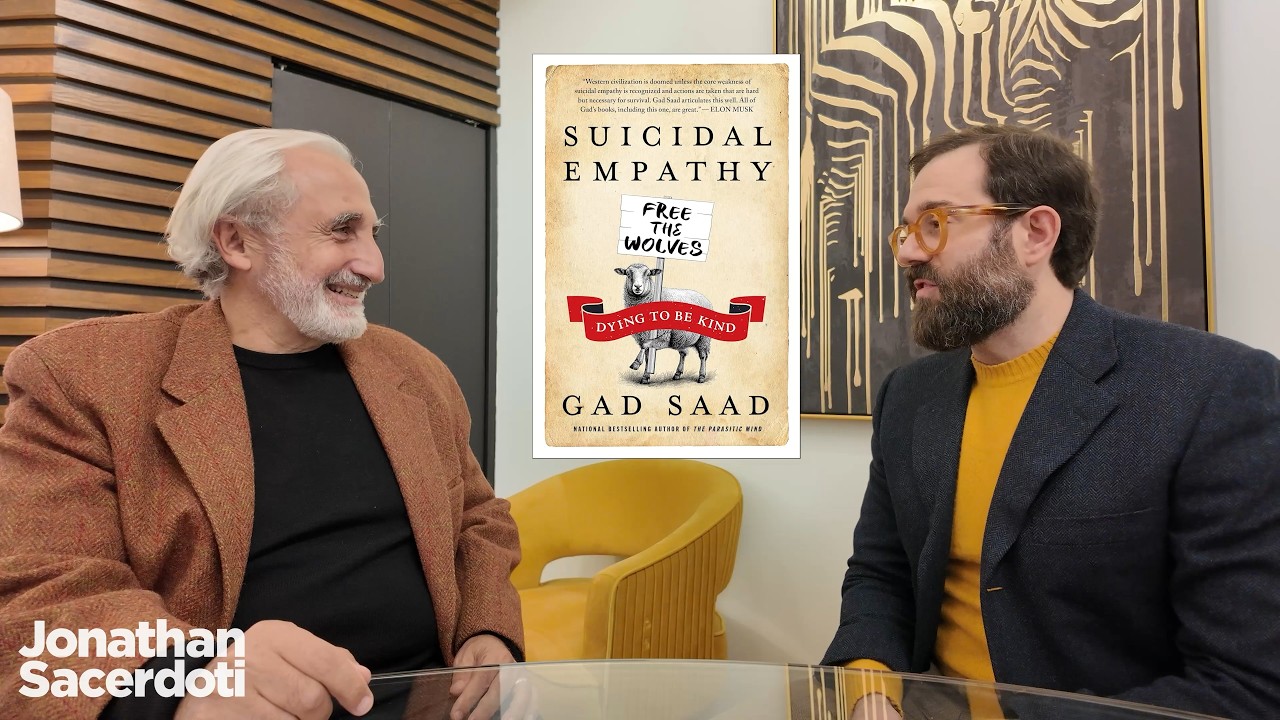
‘Suicidal Empathy’ is such a perfectly judged phrase for some of the most misguided tendencies in many Western governments, including Britain’s, that it has already taken hold in mainstream conversations – despite Dr Gad Saad's book of that name not even being out yet. Now, the wait is nearly over, and the book is out in less than one month. It was a pleasure to speak with him about it yesterday, before we sat down for a longer discussion on antisemitism and Islam.
Play Video
Play Video
02:20
Campaign to take LGBTQ+ Londoners to Nablus as Brent Council 'twins' with the Palestinian city
Play Video
Play Video
12:39
Kanye West should be barred from UK as a foreign hate preacher. Plus Brent council twins with Nablus
Jonathan Sacerdoti urges the Home Secretary to bar entry to the UK for the singer who released Nazi song. Plus the LGBTQ+ campaign to visit Nablus as London's Brent council twins with the Palestinian city.
Play Video
Play Video
07:34
Should Britain ban Kanye West from entering the country?
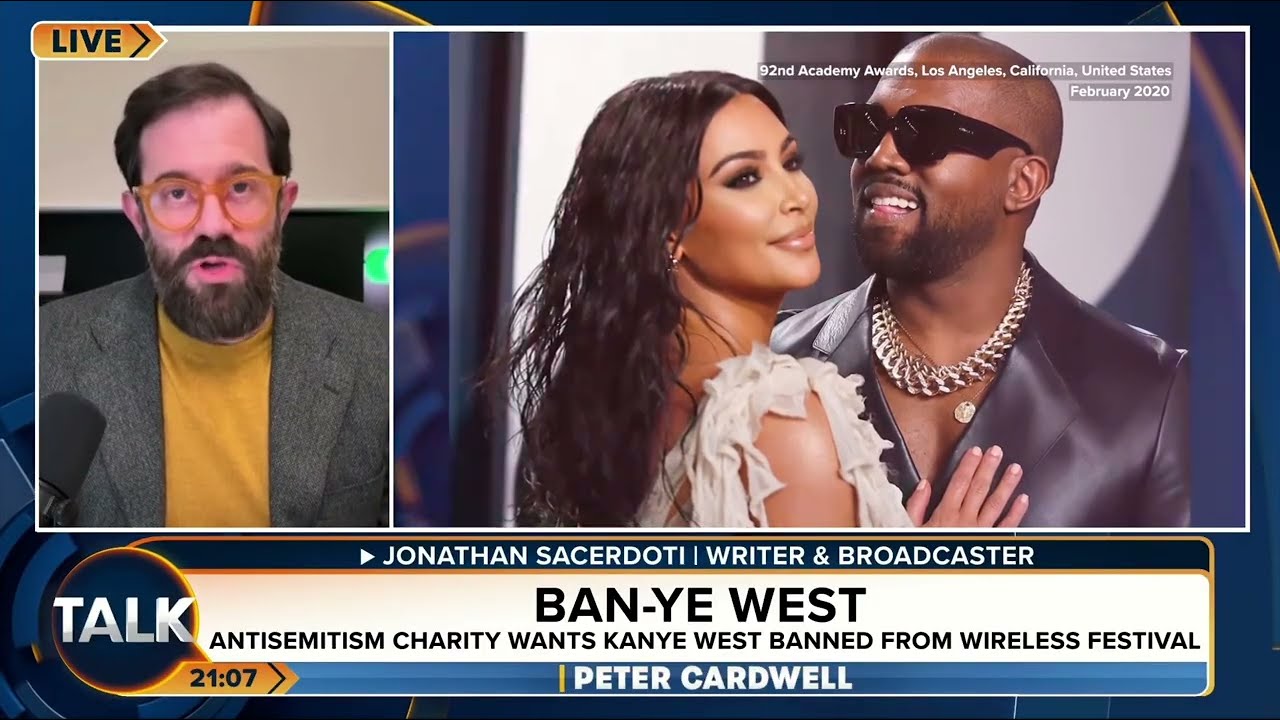
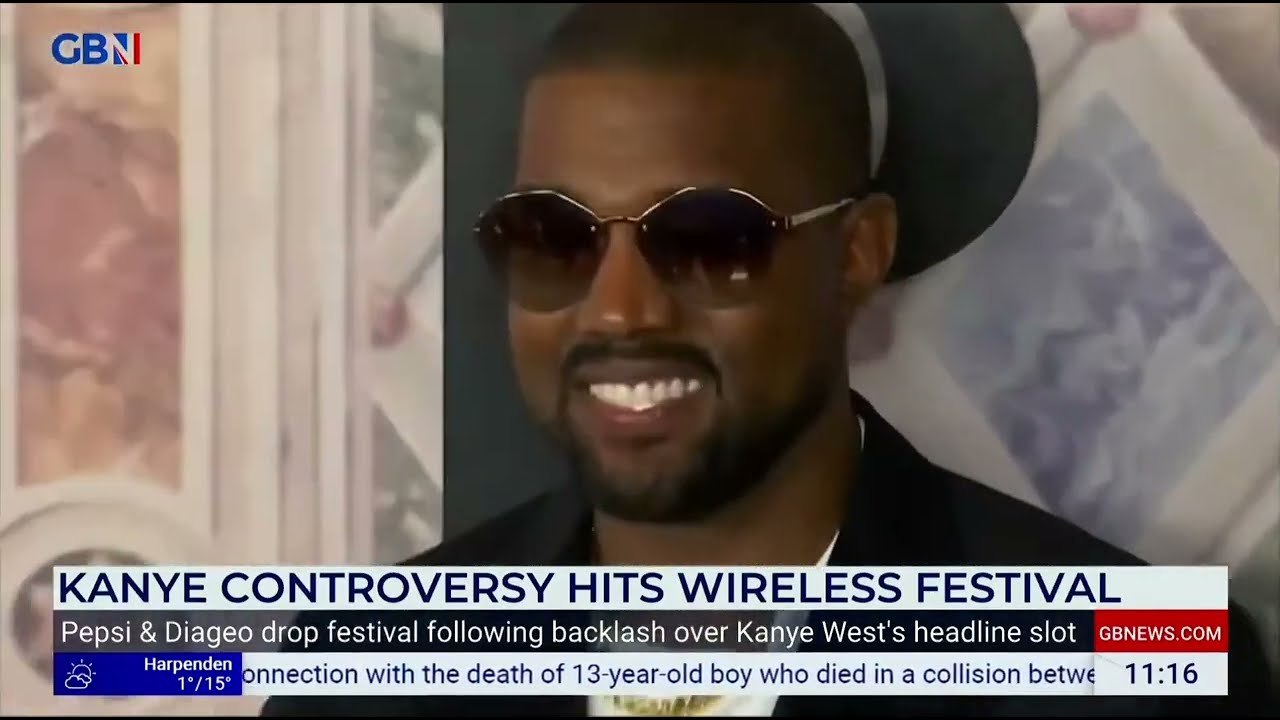
Pressure is mounting on organisers of Wireless Festival to cancel Kanye West’s planned headline appearance in London this July, with calls also growing for him to be denied entry to the UK. The artist, now known as Ye, has faced widespread backlash over a series of antisemitic controversies, including releasing a song titled Heil Hitler and selling swastika-branded clothing before later apologising and attributing his behaviour to his bipolar disorder. Prime Minister Sir Keir Starmer has described the booking as “deeply concerning”, while senior politicians have argued that allowing him to perform would send the wrong message. There have been calls from across the political spectrum for the government to refuse him a visa, with critics saying his past actions represent a pattern of behaviour rather than an isolated incident. Some have also argued that he should not be given a platform in the UK at all. The festival, due to take place in Finsbury Park and expected to draw tens of thousands of attendees, is now facing increasing scrutiny as ticket sales begin. Commercial pressure is also intensifying, with major sponsors including Pepsi and Diageo withdrawing their support, and PayPal removing its branding from promotional materials. The controversy has raised broader questions about accountability in the music industry and whether artists with a history of inflammatory conduct should be allowed to headline major public events.
Play Video
Play Video
07:03
The Iranian ‘spy recruitment hub’ operating in London
Press TV’s reporting on Jewish organisations compared to a ‘target list for terrorists’ according to a report in the Telegraph.
Play Video
Play Video
08:34
BBC World at One: why are some Britons are uncomfortable about public Muslim worship in Trafalgar Sq
Jonathan Sacerdoti and Naveed Asghar debate the validity of public Islamic prayer in central London.
Play Video
Play Video
12:55
London 'open Iftar' in Trafalgar Square causes controversy as MP says it shouldn't be allowed
Jonathan Sacerdoti discusses the reaction to Nick Timothy's opinion on mass Muslim worship in Trafalgar Square.
Play Video
Play Video
05:12
Should Trafalgar Square be used for public Muslim prayer?
After Nick Timothy MP said the public Muslim prayer in Trafalgar Square attended by London Mayor Sadiq Khan should not be repeated, Jonathan Sacerdoti examines the phenomenon of Islamic prayer in public places.
Play Video
Play Video
04:23
Al-Quds Day organiser compares Ayatollah Ali Khamenei to Nelson Mandela
Faisal Bodi, a spokesman for the Islamic Human Rights Commission which helps organise the now forbidden annual al-Quds Day march in London, insisted that Ayatollah Ali Khamenei was a man of “principle and integrity”. He was asked on the BBC if he’d hold a picture of Khamenei, and he replied “Happily. I would rather hold a picture of the Ayatollah than Keir Starmer or Donald Trump.”
Play Video
Play Video
09:15
Patriotism, Free Speech and Britain’s “Social Cohesion” Debate
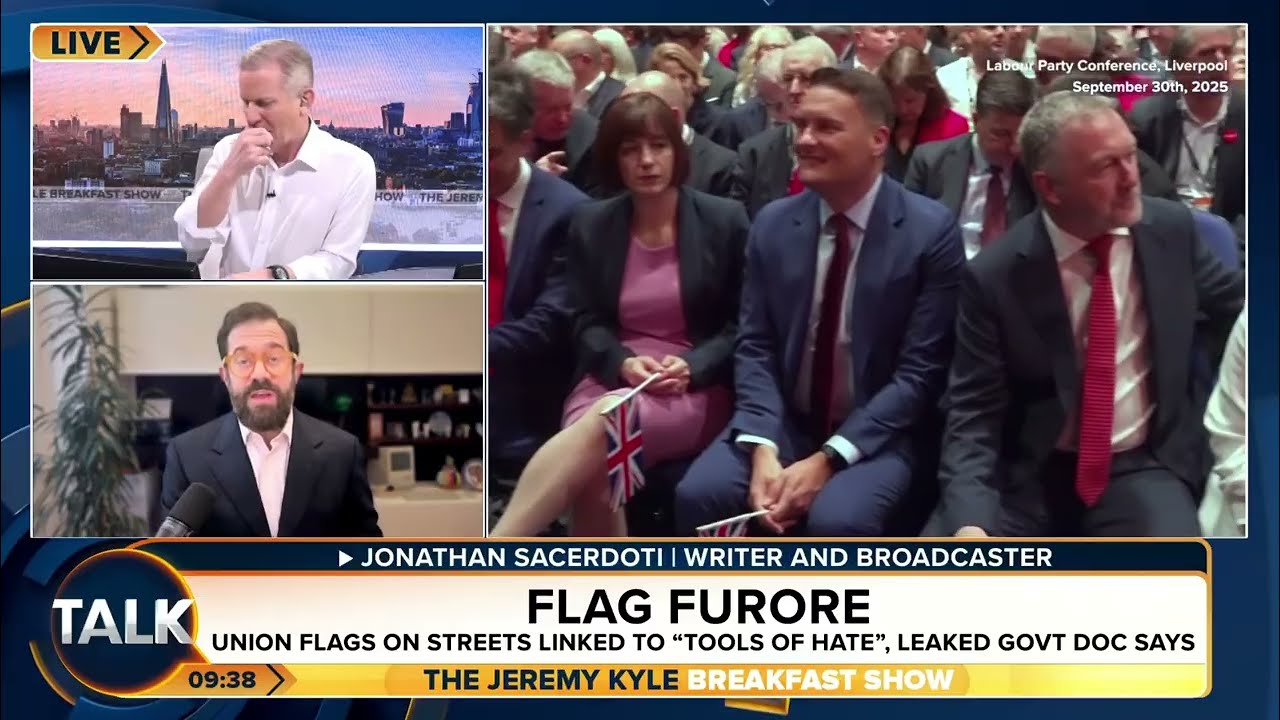
Jonathan Sacerdoti comments as a leaked government document on “social cohesion” has ignited fierce debate in Britain. The draft suggests that national symbols such as the Union Flag and the St George’s Cross have been used as “tools of hate”, while also proposing measures including the appointment of an anti-Muslim hatred commissioner. But critics argue that framing patriotism itself as suspicious risks deepening division rather than healing it. While some proposals in the document could strengthen Britain’s ability to combat extremist networks, others risk undermining free speech and national unity. Jonathan explains why criticism of ideologies including Islam must remain legitimate in a free society, why antisemitism requires clearer attention in policy discussions, and why the British flag should be seen not as a symbol of exclusion but as a unifying emblem for citizens of every background.
Play Video
Play Video
06:38
Pro-Ayatollah protest in Britain: why are people mourning Iran’s regime on UK streets?
Jonathan Sacerdoti comments, as In Birmingham and Manchester, activists have gathered to mourn Ali Khamenei and other figures connected to the Iranian Islamic Republic regime while chanting slogans such as “death to the IDF” and burning Israeli flags. These scenes raise uncomfortable questions about what exactly is being expressed on Britain’s streets. They are declarations of support for movements and ideologies openly aligned with violence and terrorism. This reflects a broader struggle between the values of democratic civilisation and the forces that openly reject them. When demonstrations glorify regimes that have sponsored international terrorism or call for violent uprisings such as the intifada, the line between protest and the endorsement of violence becomes impossible to ignore. The real question facing Britain is whether a society committed to freedom can continue to tolerate open support for ideologies that undermine it.
Play Video
Play Video
09:05
What's good and bad in leaked social cohesion plan: 'Islamophobia tsar' and flags a 'tool of hate'
Jonathan Sacerdoti discusses the potential positives and negative of the Labour government's leaked social cohesion document.
Play Video
Play Video
07:16
Trump mocks Starmer and UK–“Our once Great Ally… Joining wars after we’ve won… we will remember"
Donald Trump has lashed out at the UK and shamed Prime Minister Keir Starmer in a blistering social media post, dismissing Britain’s reported plan to send aircraft carriers to the Middle East. In the message, Trump mocked the idea that Britain would enter the conflict at this stage, writing: “We don’t need people that join Wars after we’ve already won.” He also warned that the United States would “remember”, suggesting frustration with what he implied was a late show of support from a traditional ally. Jonathan Sacerdoti explains what Trump’s remarks mean, the political message behind them, and why they matter for the future of the UK US relationship.
Play Video
Play Video
03:37
4 men arrested in London on suspicion of spying for Iran and targeting Jews. plus incoming missile
Jonathan Sacerdoti reports as the UK police arrest ten people in relation to alleged Iranian spying in the UK with intention to carry out acts of terrorism aimed at Jews. Warning: the broadcast is interrupted by an incoming missile alert and the report contains the sound of a warning siren.
Play Video
Play Video
10:10
"Iran is run by lunatics" – Rubio hits back as media twists his words. Jonathan Sacerdoti
Writer and broadcaster Jonathan Sacerdoti analyses the rapidly escalating confrontation between Israel, the United States, and Iran, explaining why claims that Israel “dragged” America into the conflict are misleading. He argues that Washington’s decision to strike was driven primarily by the belief that Iran was rushing towards nuclear weapons capability and using negotiations to stall for time. As the conflict ends its fourth day, Sacerdoti also assesses the military situation on the ground, the weakening of Iran’s missile capacity, and the wider regional implications as Gulf states find themselves increasingly threatened by Tehran’s actions. He explores how the war could reshape alliances in the Middle East and why the coming days may prove decisive.
Play Video
Play Video
06:25
Palestinians will obstruct Trump’s utopian Board of Peace vision for Gaza
Jonathan Sacerdoti responds to the Board of Peace meeting to announce plans for Gaza.
Play Video
Play Video
06:52
Ex-Prince Andrew's arrest is a symbol of the wider decline and identity crisis of Britain
Jonathan Sacerdoti explains the broader context of the arrest of Prince Andrew at a time the nation is facing a series of crises.
Play Video
Play Video
14:28
Inside central Gaza as the ceasefire is tested daily – Jonathan Sacerdoti
Jonathan Sacerdoti travels into the Gaza Strip, embedding with the IDF along the new front line that now divides the territory. Months into the Trump brokered ceasefire, Israel holds 58 per cent of Gaza behind what they call the 'yellow line'. Hamas remains in control of the rest and declares it will not disarm. Sniper fire, tunnel discoveries and daily ceasefire violations continue, even as aid enters through Israeli controlled crossings. From fortified positions overlooking the central refugee camps to staging areas where humanitarian supplies are transferred, this on the ground report examines how Israel is enforcing its security doctrine just a kilometre from its own civilian communities. Speaking with the IDF’s international spokesman, Lieutenant Colonel Nadav Shoshani, Jonathan explores Hamas’s continued tunnel building, guerrilla attacks during the ceasefire, disputed casualty figures, and the strategic calculation behind holding a majority of the Strip. The question hanging over the quiet landscape is whether this is containment, or simply the interval before renewed war. 👁🗨 Watch if you want to understand how a ceasefire operates when territory is divided, weapons remain in place, and both sides prepare for what may come next. 💬 We Discuss: 🟡 Why Israel is holding 58 per cent of Gaza and what the yellow line represents in practice 🔫 How Hamas continues sniper attacks and guerrilla operations during the ceasefire 🕳️ The scale and persistence of the tunnel network beneath Gaza 📦 How humanitarian aid is transferred across the border under Israeli control 🏘️ The strategic importance of Gaza’s central refugee camps ⚖️ The dispute over casualty figures and the politics of wartime information 🛡️ Whether demilitarisation is achievable under the current agreement 🌍 The prospects for international forces replacing the IDF presence 🔔 Subscribe for more serious, on the ground reporting and analysis on Israel, Gaza and the wider Middle East. 📲 Follow Jonathan On X: https://x.com/jonsac On Instagram: https://www.instagram.com/jonathansacerdoti/ On Substack: https://jonsac.substack.com 👇 Comment below — will this ceasefire endure without Hamas disarmament, or is renewed conflict inevitable? #JonathanSacerdoti #Israel #Gaza #Hamas #IDF #MiddleEast #Ceasefire #Security #Geopolitics
Play Video
Play Video
05:42
We are all living in Israel now, but some people don't know it yet
Jonathan Sacerdoti talks to Visegrad24
Play Video
Play Video
05:46
BBC omits the word 'Jews' from Holocaust Memorial day news scripts, and Cable Street report.
The BBC has once again faced criticism after failing to mention Jews in a segment about the Battle of Cable Street – one of the key moments in Anglo-Jewish history. The two-minute report – which was aired on BBC London’s lunchtime news bulletin on Monday – highlighted the presence “the Irish and dockers”, but gave no mention to the central role that Jews played in events. Throughout the broadcast, vague references were made to various “communities” which joined forces on the day. They did the same for Holocaust Memorial Day.
Play Video
Play Video
03:30
86 arrested outside UK prison supporting hunger-striking affiliate of proscribed terrorist group
Dozens of protesters were arrested at HMP Wormwood Scrubs after a demonstration in support of a hunger-striking prisoner linked to the proscribed group Palestine Action. Police said protesters entered prison grounds, refused to leave, and obstructed access for staff, leading to 86 arrests for aggravated trespass. The protest followed charges relating to a break-in at RAF Brize Norton, where military aircraft were vandalised, an incident that helped trigger the group’s banning under UK anti-terror laws.
Play Video
Play Video
07:48
Trump’s “Dubai for Gaza” plan is fantasy diplomacy — but could it actually work?
Jared Kushner’s vision for Gaza sounds like something lifted from a sci-fi property brochure: Jetsons-style skyscrapers, 100 percent employment, and a rapid transformation into a Dubai-like coastal powerhouse. But scratch beneath the surface and the plan begins to look less like serious policy and more like fantasy geopolitics. Jonathan Sacerdoti breaks down why the proposal is riddled with contradictions, from the sheer impossibility of rebuilding Gaza at breakneck speed, to the unresolved reality of Hamas, disarmament, and the diversion of aid. But maybe that's the point...
Play Video
Play Video
05:11
Trump administration considers offering asylum to British Jews over rising anti-Semitism
The Trump administration is reportedly discussing whether the United States should offer asylum to Jews who feel unsafe in Britain. Robert Garson, President Trump’s lawyer, says rising anti-Semitism and political inaction have made the UK “no longer a safe place for Jews”, and has raised the proposal with senior State Department officials.
Play Video
Play Video
12:08
West Midlands Police ignored a number of crimes against Jews in Birmingham
Play Video
Play Video
04:27
Jews are fine. Don't exaggerate.
“It’s just one incident.” Until it isn’t. Every time something happens to Jews, we’re told not to exaggerate. Just one attack. Just one protest. Just one cancellation. Just one joke. Just one threat. If Jews no longer feel safe in the West, what does that say about the societies we live in?
Play Video
Play Video
11:04
Alaa Abd El-Fattah should never have been given citizenship or admitted to the UK
Jonathan Sacerdoti discusses the UK’s warm welcome of the controversial Egyptian despite extensive evidence for many years in the public sphere of his extremist statements and calls for violence. 
Load More
bottom of page